
The case for optimism
the buzzards are circling, but it's not over yet

The robins are back in southern Iowa. I sit on my balcony, basking in climate change. Two male robins fight each other across the rapidly-greening backyard, their little red chests puffed out and wings fluttering madly. A third perches on the empty birdbath; he watches like a referee, or like he has dibs on the winner. The whistle of a passing train competes with dozens of bird calls. Everything is waking up, and the robins are getting into fighting shape to find their mates.
Whatever happens between these robins, the buzzards have returned and can clean up the remains. They overwinter somewhere farther south, but one soared over my house this afternoon. With the buzzards back in action, the bald eagles will have some competition for carrion; they may have to hunt for their food.
I also sometimes prefer frozen meals over anything that takes effort, so I get why eagles would opt to eat the dead when available. Still, the eagles are probably eager to welcome all the small animals out of their winter hideaways.
I feel like a small animal right now — ready to be out in the sun, but sensing threats looming over me.
I asked my brother how he was doing this morning. He said, “I wish the Mayans would have gotten their timeline right.”
I see his point. If the apocalypse had come in 2012, as we were led to believe the Mayans had predicted, I could have gone out on a high note. I was thirty, living in San Francisco, writing romance novels, with eyes bright and a neck still full of collagen. If the apocalypse comes now, it will find me looking more like a buzzard — circling around my dead hometown, neck jiggling, sizing up what’s left to see if it will sustain me.
A buzzard’s only weapon is that it projectile vomits acid at its foes. If only I were similarly equipped. I already feel nauseated all the time. I could etch the faces of my enemies with my disgust.
But this is supposed to be the case for optimism.
I would get a second passport if I had a birthright way to claim one. But my ancestors were the early birds in the colonizer Olympics. The first one showed up on the Mayflower, and everyone else made it here before the (first) Civil War. There is no “old country” that will take me.
Colonizer karma means it’s probably fair that I don’t have a second-citizenship escape hatch. But does it also mean that my DNA is encoded to recognize when a religious war is flaring up and I should be GTFO’ing? Is that why I feel so nervous?
In the sun it feels laughable. The robins are back, after all. The tulips have pushed up through the topsoil in the last few days, stretching toward the sky. It’s my third spring living in Iowa as an adult, and it feels identical to every previous spring — sun, blizzard, tornado threat, more sun, endless mud, maybe some hail, and life bursting all around me.
I sit on my balcony and think about planting fruit trees. Apples, cherries, peaches, pears, and plums all grow here. I dream of a future with pies and tarts and applesauce. But growing trees takes time.
They say the best time to plant a tree was forty years ago, and the second best time is now. The third best time is when it’s too late for you, but just in time for a roving band of cannibals in a dystopic future who will be delighted to roast scavenged apples alongside the last guy they captured.
My thoughts are all fragments these days.
I would probably be thinking of leaving Iowa even if we weren’t in the midst of a constitutional crisis / impending economic collapse / descent into fascism / evolving bird flu (the sleeper black-swan event — for lack of a better pun — that I think is going to cause havoc).
I need more friends, more stimulation, more more more than this rural life sometimes provides.
But I still love this place and these people. It’s a love intertwined with grief — a bittersweet ache, a sepia photo fading in this world of AI-generated neon.
Do you remember the World Book encyclopedias? They had diagrams of the human body with transparencies that overlaid each other. You could peel them back and see organs, blood vessels, bones — all the layers that make up our physical forms. I spent hours with them, imagining all I couldn’t see beneath my skin.
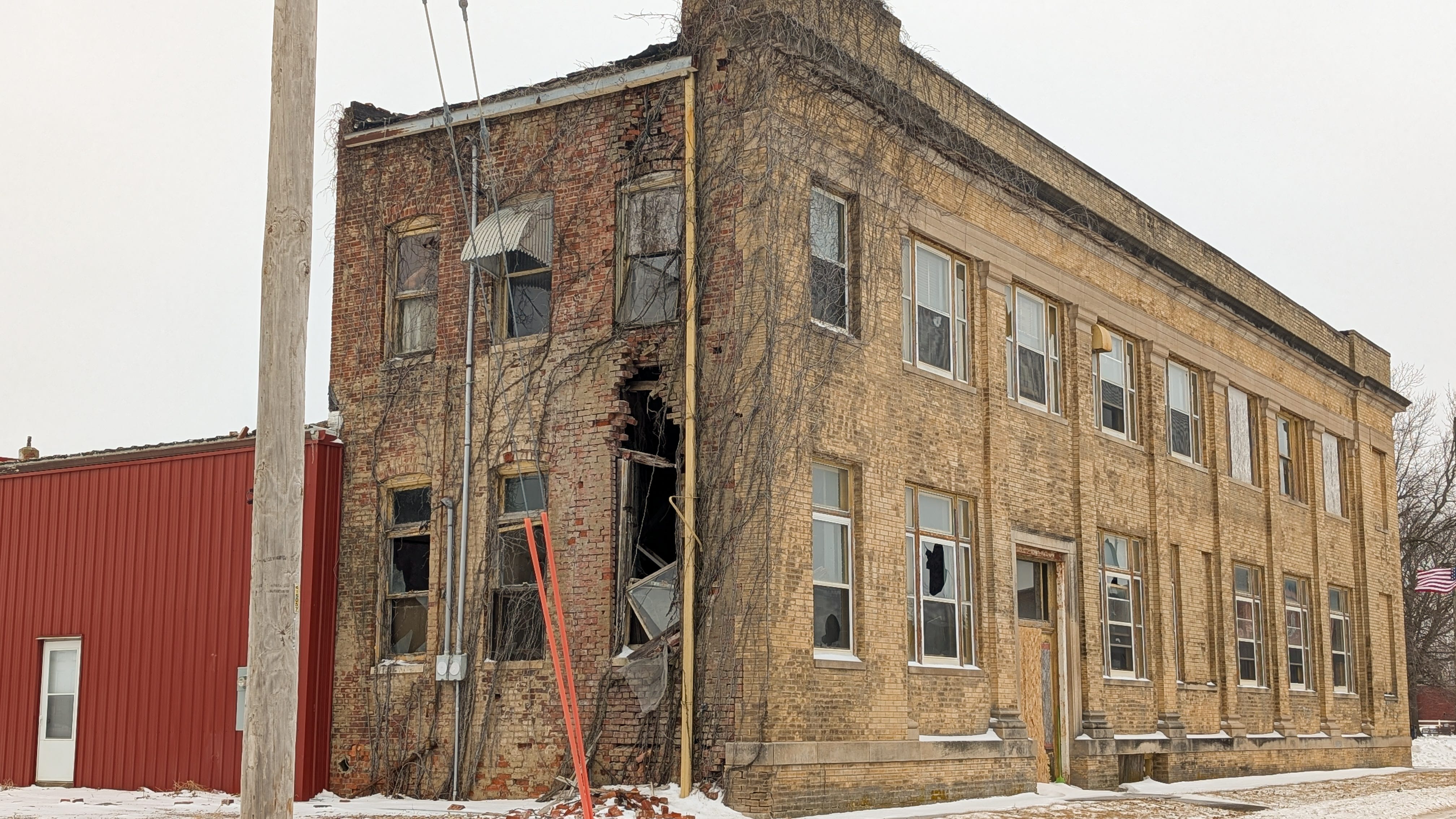
My memory carries transparencies of my hometown. 800 people lived here when my grandma was a kid. The population dropped to 700 when my dad was a kid and 600 when I was a kid. Now it’s 430. The countryside collapsed even more precipitously, taking all the consumers who might have spent money in town, and all the kids who might have become future generations.
I can see what used to be — overlays of businesses and people that have disappeared, leaving fragile bones behind.
I walk “downtown,” as I call it, past half-abandoned buildings. I feel an ache so sharp that I want to escape into a glass of wine, or lie down and wait for the buzzards to get me. I see my grandparents’ store as it was in the 1980s, selling feed and seed to local farmers: the awning cranked open by hand every morning, my granddad’s rocks and cacti in the big front window, men loafing around the wood stove eating popcorn.
Flip the transparency, and it’s all gone. Even the bones of that building are crumbling now.
How much worse is this feeling for my dad, who carries even more transparencies? In truth this place was already dying by the time I was five. When he was five, there were still movie theaters and grocery stores and cafes and a roller skating rink and a passenger train stop. All of that has been gone for decades, and it’s not coming back.
It’s no wonder his heart is failing him.
But Sara, you say, this is supposed to be the case for optimism!
Let me try again.
Merriam-Webster defines optimism as:
a doctrine that this world is the best possible world
an inclination to put the most favorable construction upon actions and events or to anticipate the best possible outcome
Neither of those sound all that appealing — or even all that possible — right now.
But the alternatives are:
Pessimism: the doctrine that reality is essentially evil
Nihilism: a doctrine or belief that conditions in the social organization are so bad as to make destruction desirable for its own sake independent of any constructive program or possibility
Fatalism: a doctrine that events are fixed in advance so that human beings are powerless to change them
Idealism: a theory that ultimate reality lies in a realm transcending phenomena
Are those any better?
I would argue that we have reached this point because the collective consciousness has been steeped, at least since the Vietnam era, in a toxic stew of pessimism, nihilism, fatalism, and even idealism. Pessimism believes the worst about each other; nihilism wants to destroy everything and start again; fatalism believes we deserve it; and idealism ignores reality in favor of emotional or spiritual transcendence.
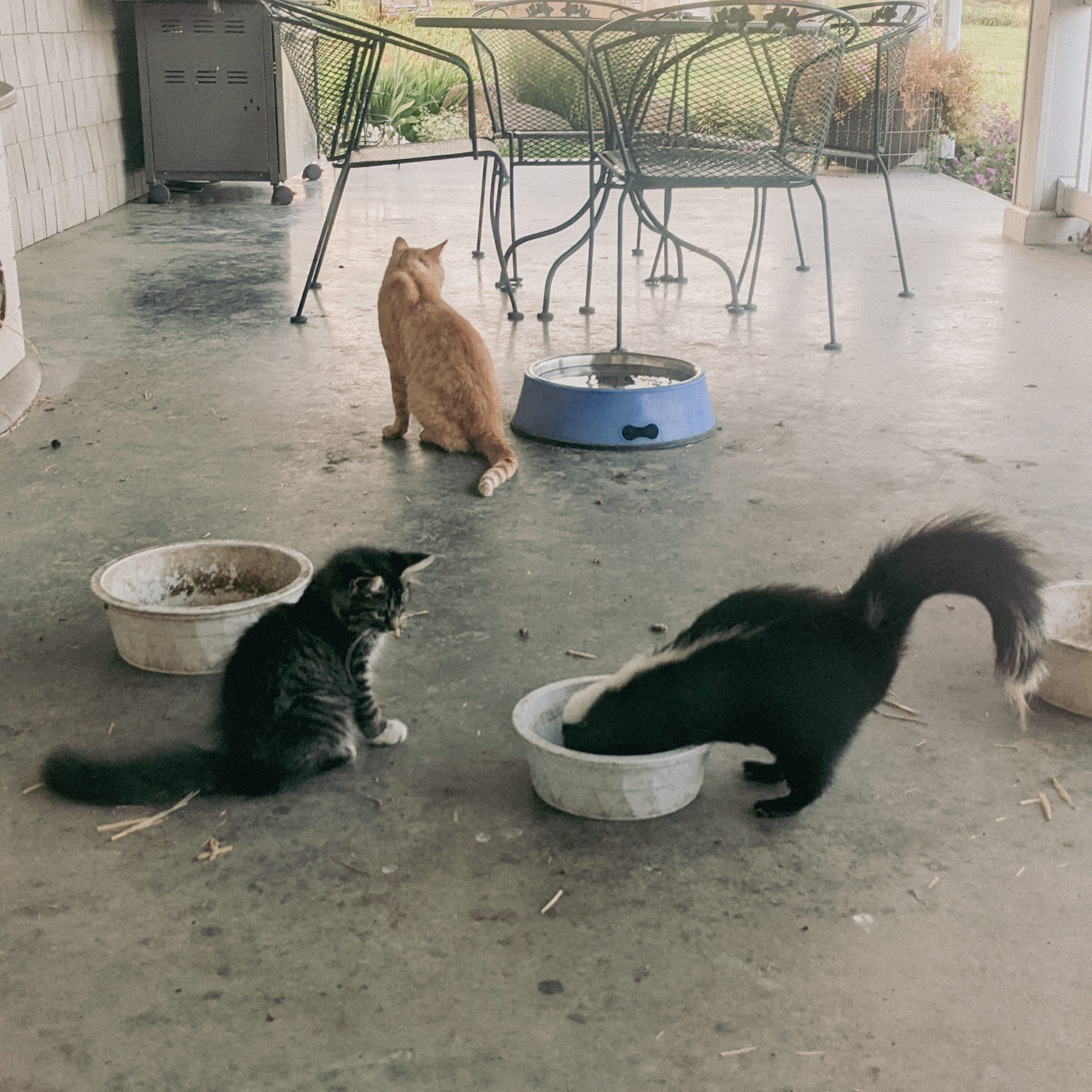
I was born in a place that is dying. I live here now because this place still means something to me; because I feel I can’t leave my family; and because I can’t decide whether to weather the coming storms here or somewhere else.
But in this place, I see the case for optimism — not because it’s easy, but because it’s better than pessimism for coping with immense loss.
Let’s say you lose everything. Let’s say it feels taken from you by government policy, by macroeconomic collapse, by politicians in far-off cities. Let’s say you survive — but your life, and your children’s lives, are not what you wanted, not what you worked for, not what you already had within your grasp. And your entire community, or industry, or both, are taken out by the same factors.
The world, inevitably, rebounds. Spring comes; things regrow. Everything is cyclical. This moment is too.
But the life you loved, the work you chose, the specific rhythms of what you used to do and how you used to do it — maybe none of it ever quite comes back.
That’s what happened in my hometown, and across the rural Midwest, in the farm crisis in the 1980s. We’ve spent the past forty years here living with ghosts of what was, and what will never be again.
A lot of pundits attribute “white rural rage” to racism. That’s undoubtedly part of it. But I think the real core — the unhealed wound that made people susceptible to all the rhetoric of right-wing talk radio and planted the seeds for MAGA — is grief.
Maybe most people can recover from grief. But I find it plausible that 10, 20, 30% of people who suffer a catastrophic loss become pessimistic or nihilistic. Or they turn to idealism or fatalism, forsaking attempts to improve this world because they place all their hope in the next world. They are primed to believe that everything is getting worse — because in a pessimistic worldview, it is.
Interest compounds; pessimism does too.
Over time, that’s enough to swing an election. Over time, that’s enough to change the fabric of an entire community.
Over time, that’s enough to poison any joy, any happiness, any hope you might feel in your own life.
The farm crisis is a harbinger of what is happening now. Government policy, private equity, AI, and other macroeconomic factors are pushing endless layoffs across the federal government and white-collar America. We may reach a tipping point where those jobs, communities, lifestyles cannot come back. And then how will we choose to react?
Maybe that’s the case, however bleak it is, for optimism.
It’s not that there are obvious signals of hope in the here and now. It’s not that we can blindly assume that this will all work out.
The case for optimism is: we are still here, which is better than the alternative. We can still work for a better outcome.
We can still plant apple trees, even if we may not be the ones to enjoy the fruit.
Perhaps we can’t immediately create a better global scenario than the one we are in right now. But as individuals, we can opt for actions that enable us to live up to our own values, engage with our communities, and take pleasure where we can.
We may be on the road toward banning vaccines, but optimism is a powerful inoculation against despair. It’s tempting to be a buzzard, floating on the wind, waiting to vomit on your enemies and eat their corpses. But holding onto all that acid surely isn’t good for you.
Choosing optimism — even now, even here, even when it seems impossible — is likely the only way to navigate whatever comes next.
Take care,
Sara
p.s. If you missed my last post, I wrote about semen guys. That sounds optimistic, right?
Chutes, no ladders

Here’s something I heard in Iowa recently: “I think my semen guy stole my truck.”
p.p.s. Thank you for reading! If you haven’t subscribed yet, please do - it’s a free and easy way to support my work. And I would love if you shared this post with a friend!
Good to see a post from you. Thoughtful as usual, thanks for sharing what’s on your heat and mind.
Moving and beautiful. (the black swan…!)