
Unbearably human
On feeding ghosts to the machines

This week, Substack launched a partnership with Pangram to analyze which newsletters might be written by AI. With the social media discourse currently split between AI-maxxing tech bros and anti-AI vigilantes (and, as usual, a wide range of opinions in between), I told my brother that I’m concerned about false positives and witch hunts.
He isn’t worried for me. “Your Substack is unbearably human,” he said.
Unbearably human. As a tagline, it’s a banger.
I feel unbearably human this week. I’m sweltering in the heat dome. A migraine knocked me out for two days. I smashed several tomato hornworms with my gloved fingers before giving up on organic gardening and resorting to pesticides. My human body has had enough.
Luckily I can give my human body a break sometimes. A few weeks ago, I dipped back into San Francisco for a work trip. I took self-driving Waymo taxis, bought a cashmere cardigan, and gorged myself on sushi. I saw as many old friends as I could. I fed on the buzz of the city, even as every conversation turned to the AI apocalypse.
Here in Iowa, my reentry was abrupt. I came home to find that another old farmhouse was gone.
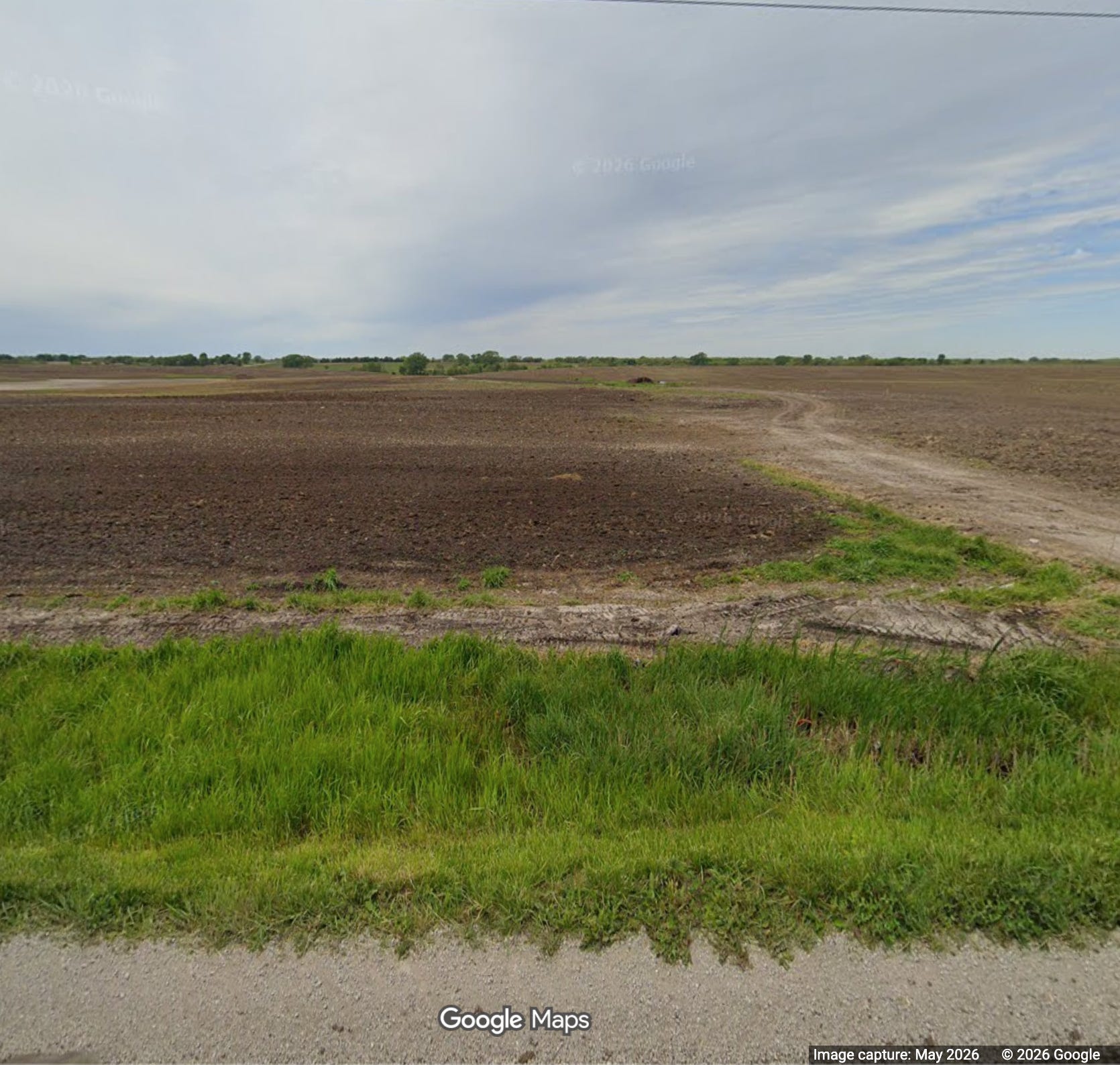
I drove by the empty field on the way back from the airport. The wreckage had already been buried. The house won’t be replaced — every inch of land is now cultivated. Soybeans are already growing where the broken door once hung ajar. You will visit me someday and never guess a house was there.
Perhaps this is progress. The house wasn’t a human home in my lifetime. Instead, cows lived there when the owner rotated them through various pastures. Calves escaped inclement weather in that little house, right off the highway, where I drove by them almost every day.
There was something about the house that I loved. The weathered boards had lost their paint years ago. Generations of hooves had churned the front yard to mud. Rural Iowa is full of abandoned houses — remnants of the farming apocalypse that wiped us out forty years ago. At least this house got a second life as a barn.
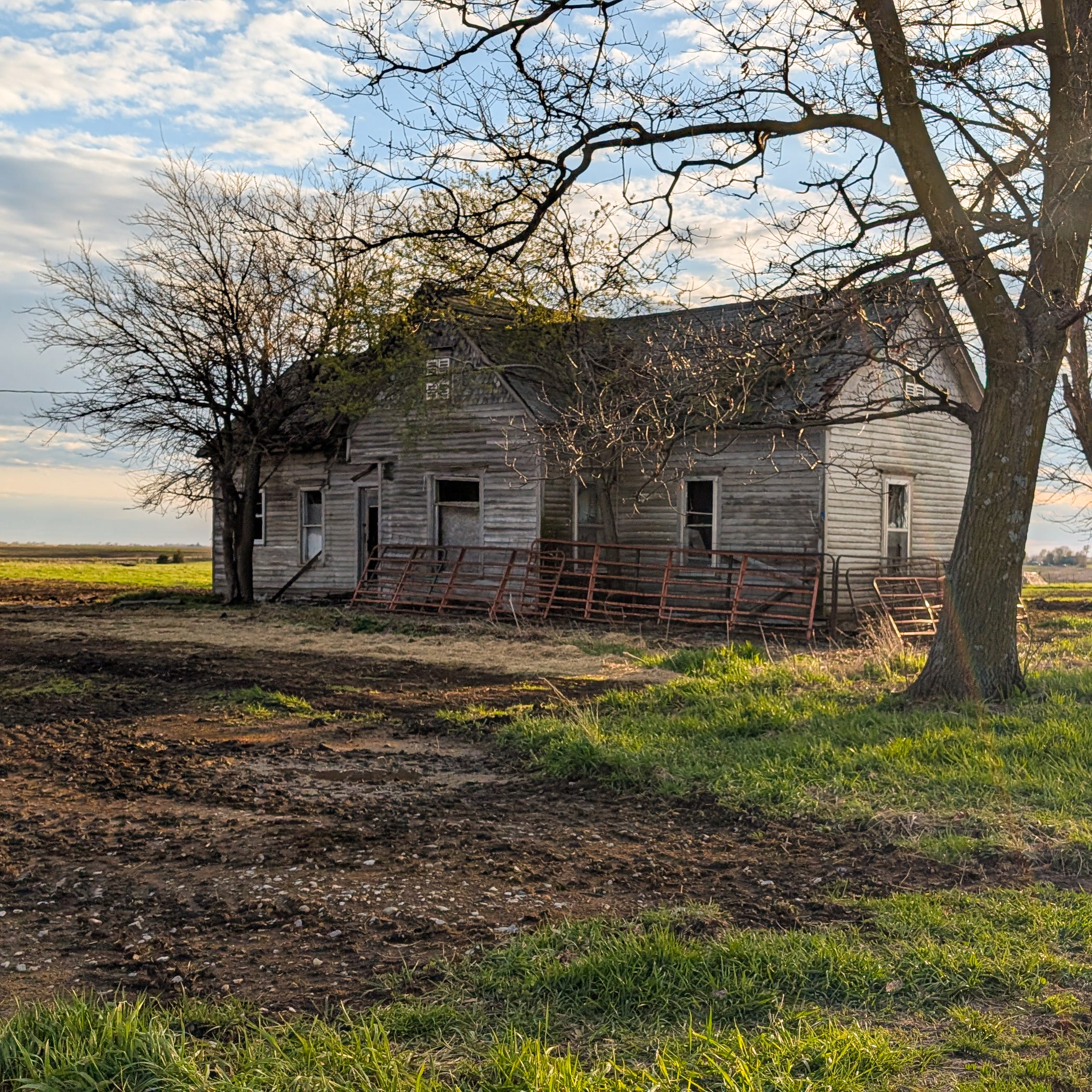
The last human to live in that little house was a woman named Goldena. It was her son who turned his childhood home into a cattle pen. Goldena was still alive when I was a kid, but she lived in one of the senior housing apartments in town. She and my great-granddad were neighbors. They seemed to think the speed limit should match their ages, since they both drove 80mph on the two-lane roads between towns. People said it was a wonder they didn’t accidentally kill each other.
When I visit San Francisco, my Waymos don’t drive like Goldena did. She would have hated their strict adherence to speed limits. For the sake of future Goldenas, though, I wish Waymo would come to rural Iowa. We have no public transportation, no Ubers, no DoorDash, no Instacart. Older people often move to join their kids in the cities because they can’t get help with errands. Waymo could solve this.
But Waymo would need thousands of hours of training drives here. Its training on the paved hills of San Francisco would have little bearing. It would need to sense the shifting ground in a different way — the washboard ruts of gravel roads; the soft, sucking clay of mud season; the black ice at unmarked intersections; the way even our paved roads are reverting to dirt as revenues can’t keep up with repairs.
In San Francisco, self-driving cars seem inevitable. But in Iowa, the tech giants don’t have much incentive to help us. Self-driving cars will likely follow the trajectory of utilities like electricity, telephone, and broadband: massive experimental investments made during the early phases of development, a rapid rollout to profitable urban cores, and then a staggering delay to reach the less-profitable last miles of rural development. Iowa is already sacrificing its soil and water to feed the world’s need for data centers, but there is no guarantee that the data processed will benefit us.
And yet the nerdy child within me — the one who read sci-fi and dreamed of being a cyborg, the one who planned to escape this small town life — is secretly excited by this version of progress.
I like Waymos. After all, Uber drivers can be awful. One of my human drivers in San Francisco accidentally turned onto the offramp of a freeway. Another seemed to be going through a mental breakdown, which he detailed for thirty minutes while I made soothing, noncommittal noises. Waymo makes dumb mistakes, but I don’t worry that Waymo will threaten me if I say the wrong thing, or lurk around where it dropped me off. I can stare out the window and listen to my music in peace.
Often, though, I don’t look outside. I’m drawn to the Waymo’s screen instead. It shows a LiDAR view of our surroundings. Buildings are little blocks of blue. Cars and pedestrians and pets flash in and out — ghosts that disappear on the map when they lose relevance to the car’s decisions. You can watch a whole city reduced to pixels, and then eliminated, as Waymo gets ever better at filtering out what it doesn’t need to know.
In fact, you can only watch this calculus because Waymo (the company) knows that you (the human) still need to build confidence in what Waymo (the machine) bases its decisions on. In a few years, you won’t need the LiDAR view. The machine will filter and erase your surroundings, and you will trust it so completely that you will have already filtered and erased the Uber drivers who used to take you to your destination.
Here in Iowa, Goldena, and her son, and the home he kept as a barn for forty years, and the cattle he fed there, are all gone. Their ghosts will never appear on a self-driving car’s map. Google Street View has already come through and captured an empty field where the house was. There is nothing left to train the machines on what once mattered here.
I can’t be mad at the machines, though. We made them using our understanding of how neural networks work — which means they are made in our image.
Our eyes stop seeing the things we expect to see.
We glaze over buildings that have always been there.
We stop noticing the people whose presence we take for granted.
They flash in and out of awareness, deemed unimportant. Our brains function by forgetting, just as much as they function by remembering. We filter out most of what we experience in order to process only the urgent bits. We must forget in order to survive.
Occasionally, destruction jolts us back to awareness. Something disappears; someone dies. We are shocked. We grieve. We say we will never forget.
Then we rebuild our maps, fill in the voids, and move on. We go to the new restaurant that replaced our old favorite. We hang out with a new acquaintance after being ghosted by an old friend. We sift the data again and create new meaning out of lives that are constantly shifting.
I am already forgetting — unbearably — which divot along the highway used to be Goldena’s driveway. It flickers in and out, blending in with all the other soybean crops I drive by every day. By the time harvest comes, I probably won’t notice at all.
I have not seen The Odyssey; one of the costs of small town life is that I am always behind on movies. But I loved the book. I sometimes imagine how our ancient bards constructed their stories. Without writing, it must have taken incredible skill to shape a story and perform it.
It must also have taken so much communal memory to pass information through the generations. Facts like, “This mushroom killed the last guy who ate it.” Or beliefs like, “This is who we are and what it means to be human.” Storytelling is so integral to humanity that I imagine thousands of generations telling stories to each other — figuring out together, through words and songs, who they were and what they needed to remember.
Then we invented writing.
We could get facts and fears out of our heads and onto a rock, or a tablet, or a piece of paper, or eventually a screen — each method faster than the last. According to various internet memes, Socrates distrusted this newfangled “writing,” believing that it would have disastrous effects on our ability to remember and to think for ourselves. The parallels to AI are obvious.
But isn’t that what we want? More efficient ways of remembering — and more room to forget what we don’t want to know?
When I was a child, there was so much I wanted to know. I wanted to know about planets and pyramids, oceans and ice ages, God and gods and devils and disasters. I wanted to read every book and write a bunch of my own.
But facts weren’t enough. There was also so much I wanted to understand — or, failing understanding, to forget. I wanted to understand, or forget, how other kids made friends and why I wasn’t included. I wanted to understand, or forget, why all the adults were losing their farms, or why some adults never spoke to each other again over unpaid debts or perceived insults.
Even now, after decades of forgetting, my language on these topics is stilted by avoidance.
And anyway, why should I remember all the unbearable bits of the 1980s farm crisis, when the climate crisis or AI crisis or economic crisis or democratic collapse crisis are all more immediately threatening?
I can’t predict what’s coming with AI. But like I said, it was made in our image. It has been given the capacity to store tremendous amounts of information, and then trained to filter and flatten in order to produce palatable answers. It is the ultimate realization of a human impulse that may have started when we first became conscious: to remember everything, to figure out how we are meant to live, but also to avoid all the pain that comes with human bodies living in human societies.
So if my newsletter is unbearably human, as my brother said, it is not simply because of what I write, or how I write it. It is because of who I’m writing for.
I write this newsletter for you, the human: to share a glimpse of a world you may not be able to see. To make some connection with you, despite how our attention and our cultures are fragmenting.
I write this newsletter for you, the machine: you will steal it, hallucinate it, remix it. You will never understand it. But by feeding Goldena’s ghost into your machine, I can give her and her house a chance to be remembered in the stories you will generate for someone else down the line.
Mostly, though, I write this newsletter for the little girl I was: the one who wanted to be a cyborg. She didn’t want mechanical arms or built-in LiDAR. She wanted power to make sense of all the unbearable things around her.
I am still tempted, daily, to trade my unbearable human body for the promise of a machine that makes my feelings bearable. But AI feels the same as a glass of wine. Claude and cabernet both flatten perspective while pretending to help. They both whisper: ignore the fragments that cause pain; let them be wiped from your map. Let yourself be soothed and dulled. Let yourself believe this tool makes you smarter and easier and more engaged, while your brain keeps rewiring around the damage you’re causing yourself.
AI can’t solve my unbearably human feelings. But thanks to Substack, AI now gets to judge whether this was written by a human. You are encouraged to use AI instead of your own feelings to decide if I am worthy of being read.
I can’t control how you — human or machine — will evaluate what I write.
All I can do is sit in the heat dome, sift through my memories, and find the next story I will tell you — or the next detail I will decide to forget.
Cheers,
Sara
p.s. I’ll save you a click and save a data center some processing power - Pangram says this post is likely 100% human written (true). What it doesn’t know is that I finished writing it while drinking tequila, despite making an argument against the numbing effects of AI and alcohol. Pangram can’t detect every hypocrisy yet, and for that I am grateful.
p.p.s. Thank you so much for reading! Please share this with a friend if you feel so inclined - I want more people to remember Goldena’s house, since I don’t trust the machines to surface it someday.
And if you haven’t subscribed yet, please do — it’s a free and easy way to support my work.
p.p.p.s. If you missed the last post, I wrote about witnessing America’s 250th birthday from rural Iowa:
Stumbling forward

I bought items from two-thirds of the vendors at the first annual Fourth of July market. There were six vendors, so this is not as impressive or expensive as it sounds....
Or, if you want another post about AI (since they’re in such short supply these days):
A god in every pocket

Linda McMahon, the 76-year-old billionaire Secretary of Education, recently talked about using artificial intelligence for kindergartners. She repeatedly pronounced AI like A-1, the steak sauce.
Loved seeing Goldena's house and reading your piece. Perfect Hopper house, ethereal, full of hungry ghosts. Goldena and the ancestors roam the land, death is only another room.
Loved that. Sending the light. Your a smart gal :)